



In this conversation,
shares her journey of writing a biography about Sanora Babb, exploring the challenges and triumphs of the writing process. She discusses the inspiration behind her work, the importance of research, and the unique strategies she employed to bring Babb's story to life. Dunkle emphasizes the significance of empowerment in writing, particularly through creative processes like erasure, and the role of feedback from friends and family in shaping her narrative. The conversation also touches on the discipline required in writing and the parallels between athleticism and the writing process. In this conversation, Iris Jamahl Dunkle discusses the significance of recovery biographies, the challenges of archival research, and the intensity of the writing process. She emphasizes the importance of giving voice to marginalized stories and the ethical considerations involved in recreating narratives. Dunkle also shares her experiences with feminizing the index in her work, highlighting the need for inclusivity in literary research. Our conversation touches on the emotional aspects of writing, the search for one's voice, and the collaborative nature of the editing process.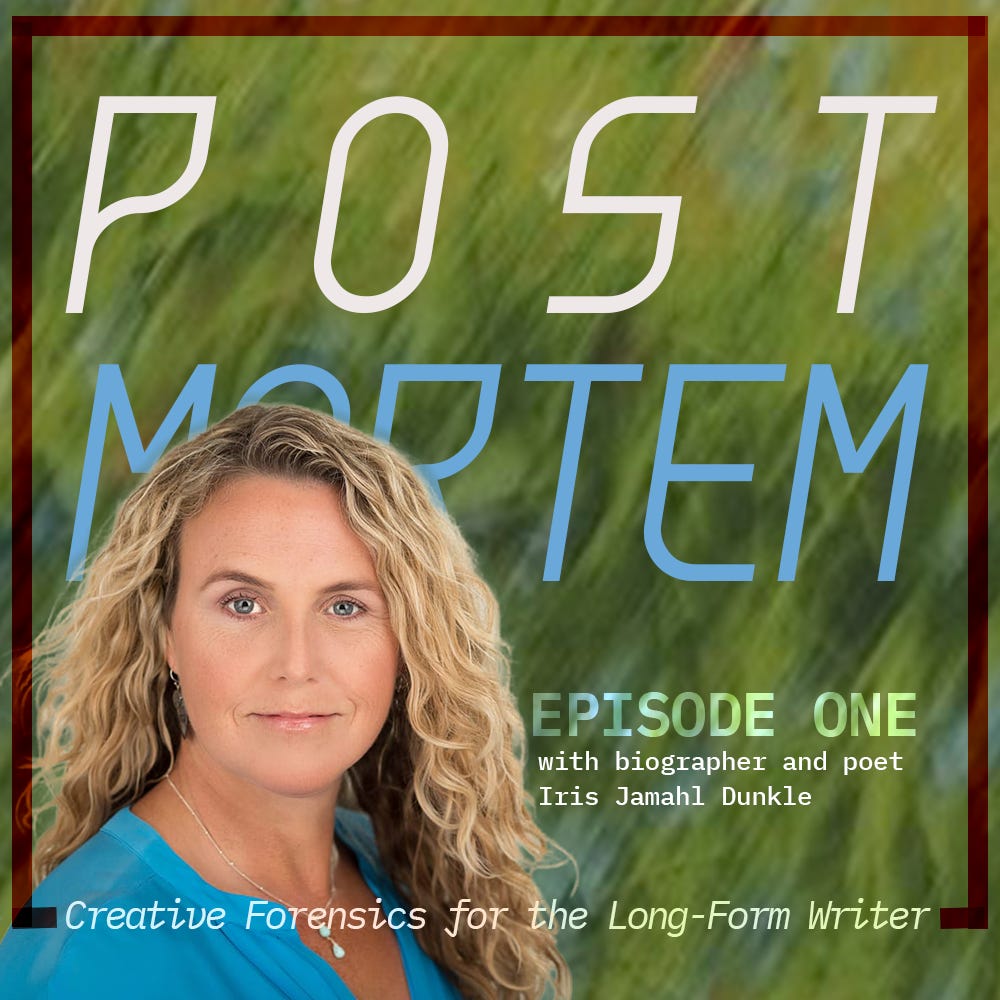

Dunkle earned her MFA in poetry from New York University and her PhD in American Literature from Case Western Reserve University. She is the author of two biographies, Charmian Kittredge London: Trailblazer, Author, Adventurer (University of Oklahoma Press, 2020) and Riding Like the Wind: The Life of Sanora Babb (University of California Press, 2024), and four collections of poetry, including West : Fire : Archive, published by The Center for Literary Publishing, Interrupted Geographies and Gold Passage by Trio House Press and There’s a Ghost in This Machine of Air by Word Tech.
Dunkle curates Finding Lost Voices, a weekly blog dedicated to resurrecting the voices of women who have been marginalized or forgotten. She has garnered recognition through awards and fellowships from esteemed institutions such as Biographers International, Millay Arts, and Vermont Studio Center, and her writing has appeared in publications like Orion, Electric Lit, Liber, Pleiades, Tin House, Calyx, Fence, The Los Angeles Review, and Split Rock Review. Notably, her work was featured on The Academy of American Poets’ Poem-a-Day series and showcased on one hundred buses during the Muni Art 2020 campaign.
Find out more about her work at irisjamahldunkle.com.

Below are selected quotes from Iris Jamahl Dunkle in our conversation:
On discovering Sanora Babb
“I have this moment of encounter with them where I know I need to tell their story. And usually, given that I’m a feminist, it’s something that is amending the loss of their voice.”
“In her stories, women have agency and they’re often the protagonist… that really lit up in my brain that she was a voice we really needed.”
On entering the project
“For me, I enter a story through an image… once I could physically be in that space in my brain, then I could engage with the conflict of the story.”
On writing biography
“I believe that writing scene-based biography is the most effective way to bring people into the story. Because I’m bringing people back to life. I don’t want to keep people away from the scene. I want them in it.”
“You are not writing somebody’s life, you’re writing a version of their life.”
On ethics and focus
“It wasn’t about just Sanora Babb being, as they said in the first draft of the title, ‘done dirty.’ It was her empowering and amazing story of her life… it became a hook in marketing, but the book is not just about that.”
On process and structure
“It’s kind of like you’re building a wire figure first and then putting on the muscles… it comes from this core wire image or idea, and then you build on top of it as you go.”
On research realities
“Being in an archive… is like fumbling around in a dark room not being able to see. You have to be always open and adaptable as you’re discovering what paths it will lead to.”
“If the funding was there for women to do the research on female authors in the same way, we would have so much more material.”
On devotion to the work
“It’s like you’re a monk… eight hours of research, then gym, then food, then hotel, ready for the next day.”
“I find a lot of parallels between being an athlete and being a writer because it’s a disciplined art where you can’t really see how to get to where you’re going, but you just keep going in blind faith until you get there.”
On recovery biography
“As long as you’re giving their voice voice and you’re using facts to support everything you’re doing, you’re doing a justice to that person—especially if you’re doing a recovery biography, which I feel like is the most important work we could do right now.”
00:00 The Genesis of a Biography
02:26 Researching Sonora Babb
05:16 Navigating Life and Writing
08:07 The Impact of the Pandemic
10:56 Crafting the Narrative
13:51 Fact-Checking and Scene Building
16:24 Empowerment Through Erasure
18:51 Connecting with the Subject
21:40 Challenges of Biographical Writing
24:25 Strategies for Overcoming Obstacles
27:52 The Writing Process: Collaboration and Challenges
30:06 Research Trips: Planning and Adaptability
33:04 The Struggles of Funding and Access in Biography
35:38 The Discipline of Writing: Balancing Research and Fitness
39:06 Navigating the Facts: The Art of Biography
40:51 Recovery Biographies: Telling Untold Stories
42:50 Ethics in Biography: Recreating Voices
45:54 The Gender Dynamics in Literary Creation
50:01 The Intensity of Writing Process
52:48 Navigating Emotional Landscapes in Biography
55:36 Finding the Writing Voice
59:23 The Impact of Place on Writing
01:04:06 Feminizing the Index
01:07:40 The Revision Process and Editor Dynamics
01:15:00 Encouragement for Aspiring Biographers
The following are texts mentioned throughout our conversation:
Charmian Kittredge London: Trailblazer, Author, Adventurer — Iris Jamahl Dunkle
East of Eden — John Steinbeck
The Grapes of Wrath — John Steinbeck
Red Comet — Heather Clark
Loving Sylvia Plath — Emily Van Duyne
Ghost in the Throat — Doireann Ní Ghríofa
Riding Like the Wind: the Life of Sanora Babb — Iris Jamahl Dunkle
Authors mentioned:
Sanora Babb
John Steinbeck
Heather Clark
Emily Van Duyne
Doireann Ní Ghríofa
Francesca Wade (Gertrude Stein biography)
Gertrude Stein
Alice B. Toklas (referenced in Gertrude Stein’s “afterlife”)

A poet, filmmaker, playwright, and writing instructor,
’s debut poetry collection somnieeee was published in 2019 by Vegetarian Alcoholic Press, and her debut feature film Ringolevio premiered in 2020 at Dances With Films in Los Angeles. Her work has appeared (or will appear) in American Poetry Review, TriQuarterly, Juked, pity bath and elsewhere. She lives close enough to Lake Michigan to pretend she can hear it.Find out more at www.kpkaszu.com.

The music you hear in this episode is by Scott Cary.
keywords: biography writing, Iris Jamahl Dunkle, Sanora Babb, writing process, research trips, empowerment, erasure, fact-checking, pandemic challenges, creative writing, biography, recovery biography, writing process, archival research, feminizing the index, editing, writing voice, women's stories, literary criticism, historical narratives, feminizing the index


